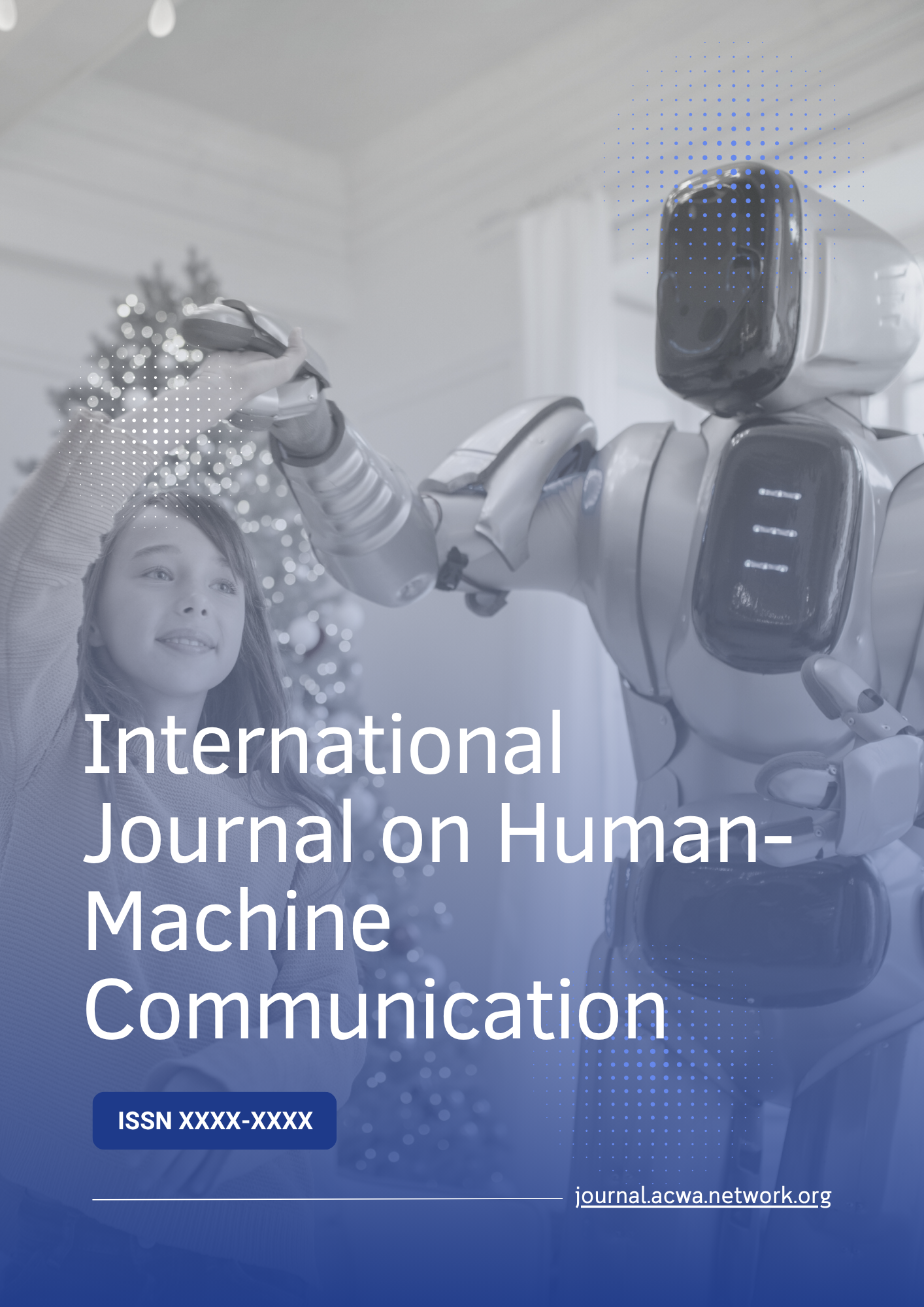

The International Journal on Human–Machine Communication is committed to maintaining high standards of publication ethics and academic integrity. The journal follows ethical principles that support transparency, originality, fairness, accountability, and responsible scholarly communication. All parties involved in the publication process, including authors, editors, reviewers, and the publisher, are expected to uphold ethical conduct in accordance with internationally accepted standards of scholarly publishing.
Duties of Authors
Authors must ensure that submitted manuscripts are original, accurate, and have not been published or submitted elsewhere. Any use of ideas, data, text, images, or other materials from previous works must be properly cited. Authors are responsible for ensuring that their manuscripts do not contain plagiarism, data fabrication, data falsification, or misleading statements.
Authors must clearly acknowledge all sources that contribute to the research. Authorship should be limited to individuals who have made significant scholarly contributions to the conception, design, analysis, interpretation, or writing of the manuscript. All listed authors must approve the final version of the manuscript and agree to its submission.
Authors are required to disclose any potential conflicts of interest, funding sources, institutional affiliations, or other conditions that may influence the research or its interpretation. Research involving human participants, user data, artificial intelligence systems, robots, conversational agents, or cyber-physical technologies must respect privacy, consent, confidentiality, and relevant ethical approval where applicable.
Duties of Editors
Editors are responsible for making fair and objective publication decisions based on the scholarly quality, relevance, originality, and contribution of the manuscript to the field of human–machine communication. Editorial decisions must not be influenced by the authors’ nationality, gender, institutional affiliation, religion, political views, or other personal characteristics.
Editors must maintain the confidentiality of submitted manuscripts and must not disclose information about a manuscript to anyone other than the corresponding author, reviewers, editorial board members, or publisher when necessary. Editors must also avoid using unpublished materials from submitted manuscripts for their own research without written permission from the authors.
Editors should take appropriate action when ethical concerns arise, including suspected plagiarism, duplicate submission, data manipulation, authorship disputes, conflicts of interest, or unethical use of human or machine-generated data.
Duties of Reviewers
Reviewers are expected to provide constructive, objective, and timely evaluations of manuscripts. Reviews should help editors make informed decisions and assist authors in improving the quality of their work. Reviewers must evaluate manuscripts based on academic merit, clarity, relevance, originality, theoretical contribution, empirical strength, and ethical soundness.
Reviewers must keep all manuscript materials confidential and must not share, use, or discuss them outside the review process. Reviewers should decline the review invitation if they feel unqualified to assess the manuscript, cannot complete the review on time, or have a conflict of interest with the authors, institutions, or research topic.
Reviewers should identify relevant published work that has not been cited and should alert the editor to any substantial similarity between the manuscript under review and other published or submitted works.
Plagiarism and Originality
The journal does not tolerate plagiarism in any form. Plagiarism includes copying text, ideas, images, data, or arguments from other sources without proper acknowledgment. Manuscripts found to contain plagiarism, duplicate publication, or unethical text reuse may be rejected, retracted, or subject to further editorial action.
Authors are encouraged to ensure the originality of their work before submission. The journal may use similarity-checking tools to support editorial screening.
Use of Artificial Intelligence
The use of artificial intelligence tools in preparing manuscripts must be transparent and responsible. AI tools may be used to support language editing, data organization, or technical assistance, but they must not replace the intellectual responsibility of the authors. Authors remain fully accountable for the accuracy, originality, validity, and ethical integrity of the submitted work.
AI tools must not be listed as authors. When AI tools are used substantially in writing, analysis, image creation, coding, or data processing, authors should disclose their use in the manuscript where relevant.
Conflicts of Interest
Authors, editors, and reviewers must disclose any financial, personal, professional, or institutional conflicts of interest that may affect the objectivity of the publication process. When a conflict of interest is identified, appropriate steps must be taken to maintain fairness and transparency.
Research Ethics and Human Data
Research involving human participants, communication data, user interaction records, biometric data, digital behavior, AI-mediated communication, or human–robot interaction must follow ethical standards related to informed consent, privacy, confidentiality, and responsible data use. Authors must obtain ethical approval from a relevant institution when required and must clearly state this approval in the manuscript.
Corrections and Retractions
The journal is committed to correcting the scholarly record when necessary. Corrections may be issued when errors are identified after publication. Retractions may be issued in cases involving serious ethical violations, unreliable findings, plagiarism, duplicate publication, fabricated data, or other forms of research misconduct.
Publisher’s Responsibilities
The publisher supports the editorial team in maintaining the integrity, independence, and transparency of the journal. The publisher works with editors to address ethical concerns and ensure that publication decisions are based on scholarly quality and ethical standards.